
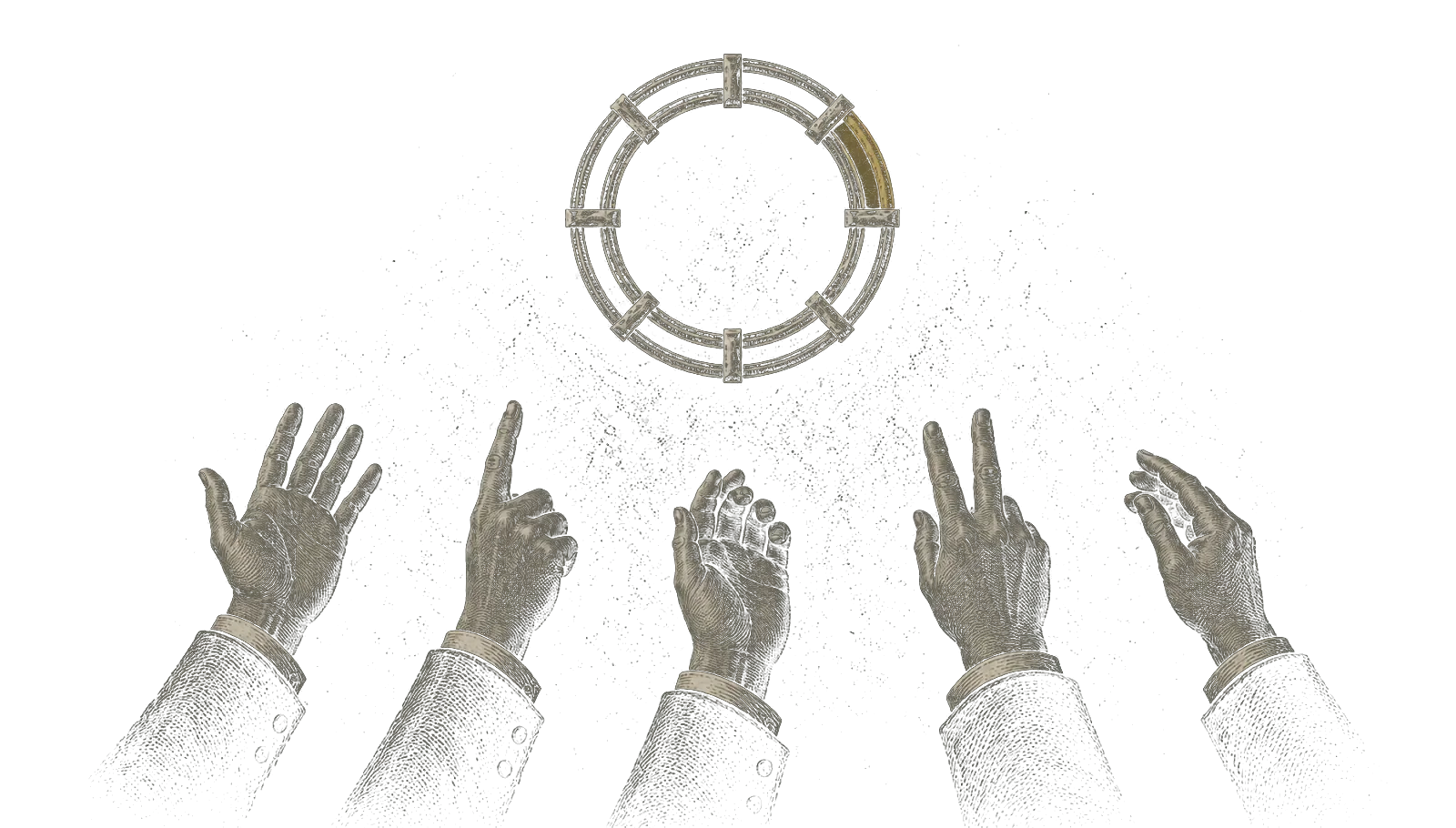
I. The basket
In the Palais Brongniart there was a ring of wood and brass, waist high, that the agents de change called la corbeille. The basket. Around it, once a day, the price of everything was fixed out loud. A man read a name, the ring answered, and a clerk wrote the figure in chalk on a slate board that everyone could see.
Nothing on that board was permanent. That was the point. The number was true for exactly as long as it stood, and at the next fixing it was wiped and written again. A price was not a fact. It was an agreement, renewed.
II. The last session
In 1987 the ring went quiet. The screens were faster, the screens did not need a room, and the screens did not need anyone to say a name out loud. The basket was carried out and the slate was wiped one last time. What replaced it was better in every way that could be measured and worse in the one way that could not: nobody agreed on anything any more. The number simply arrived.
We are not nostalgic for the brass. We are nostalgic for the moment before the chalk touched the slate, when the price still belonged to the people in the ring.

III. The ring
So we built one again, on a chain, with the ring as the only rule. Every Friday at half past twelve, Paris time, the ring opens for thirty minutes. Anyone holding a token may call a weight for each of eight names. When it closes, the weights are fixed, the week’s deposits are spent across the names, and the board is rewritten in chalk.
There is no manager, no model, no committee. There is a board, a bell, and whoever shows up to shout. The list is official because we said it together. Next Friday we will say it again.
The board is the product. Everything else is the room around it.